


A 60- or 90-minute spa treatment can provide immediate relaxation. But as guests become increasingly focused on health, beauty, and long-term results, expectations are changing. They want to understand their bodies better, see tangible outcomes, and continue their wellness routines even after leaving the hotel or resort.
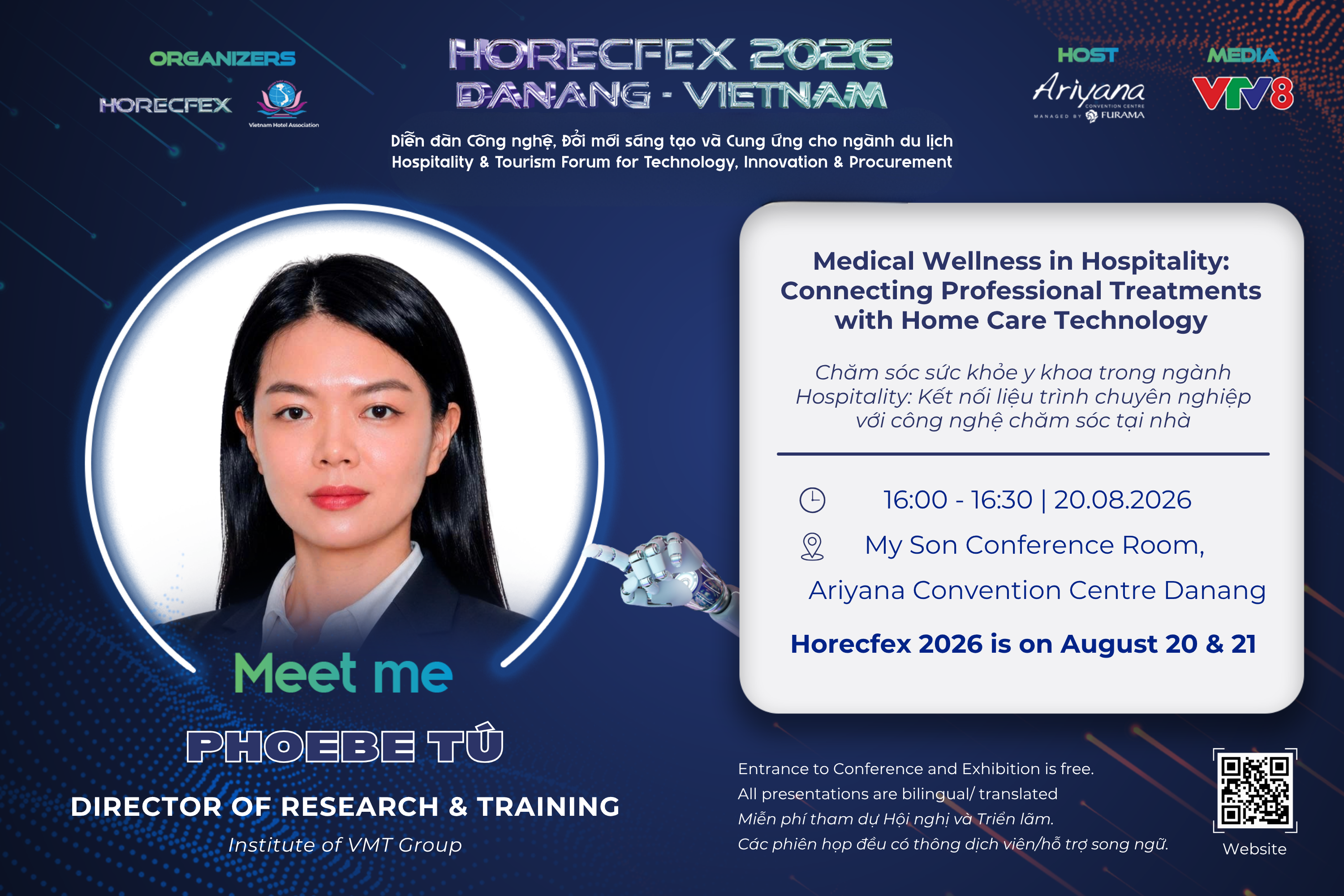
This is the approach that Phoebe Tu – Director of Research & Training at the Institute of VMT Group – will bring to HORECFEX VIETNAM 2026 during the session “Medical Wellness in Hospitality: Connecting Professional Treatments with Home Care Technology.”
With more than 10 years of experience in the Beauty & Wellness industry, Phoebe Tu’s expertise spans R&D, professional training, CRM, and customer experience design. Rather than treating a wellness service as an isolated touchpoint, she focuses on connecting science, technology, and therapeutic expertise to create a more continuous and personalized journey for each guest.
Her approach is built around three key foundations: biotechnology and cosmetic science, energy-based beauty technologies, and traditional Vietnamese therapeutic methods. By combining modern innovation with local practices, these protocols are designed to deliver both measurable results and a deeper, more meaningful guest experience.
In her R&D and training role at VMT Group, Phoebe Tu works with international brands including MENARD, YA-MAN, THALION, REVE21 Osaka, and CHANDO, while also gaining practical exposure to spa operations across MENARD Spa, Amadora Wellness & Spa, Ô Spa, and Facial Bar. This allows her to view wellness from multiple perspectives, including products, professional expertise, operations, and evolving customer expectations.
For the hospitality industry, the opportunity lies in extending wellness beyond the treatment room. A wellness program can begin with consultation before the trip, become personalized throughout the stay, and continue at home through suitable devices, products, or care guidance.
This model not only helps guests maintain better long-term results, but also creates additional touchpoints, strengthens the likelihood of return visits, and opens up new revenue opportunities beyond a single spa treatment.
At HORECFEX VIETNAM 2026, Phoebe Tu’s perspective will be especially relevant for hotels, resorts, and wellness centers looking to move from simply “providing treatments” toward “building long-term wellness relationships” with their guests.
Because the future of wellness is not only about delivering an excellent experience for a few hours. It is about continuing to support guests even after their stay has ended.