


Beyond the Sustainability Conversation: How HORECFEX 2026 Is Bringing Change into Operations
An international event may last only two days, but much of its impact is shaped weeks before it begins: what materials are produced, how food is prepared, how attendees travel, how much water and energy are consumed, and what remains once the event is over. At HORECFEX VIETNAM 2026, sustainability is therefore not treated as a separate initiative on the sidelines. It is being incorporated into the very decisions that shape how the event is organised.
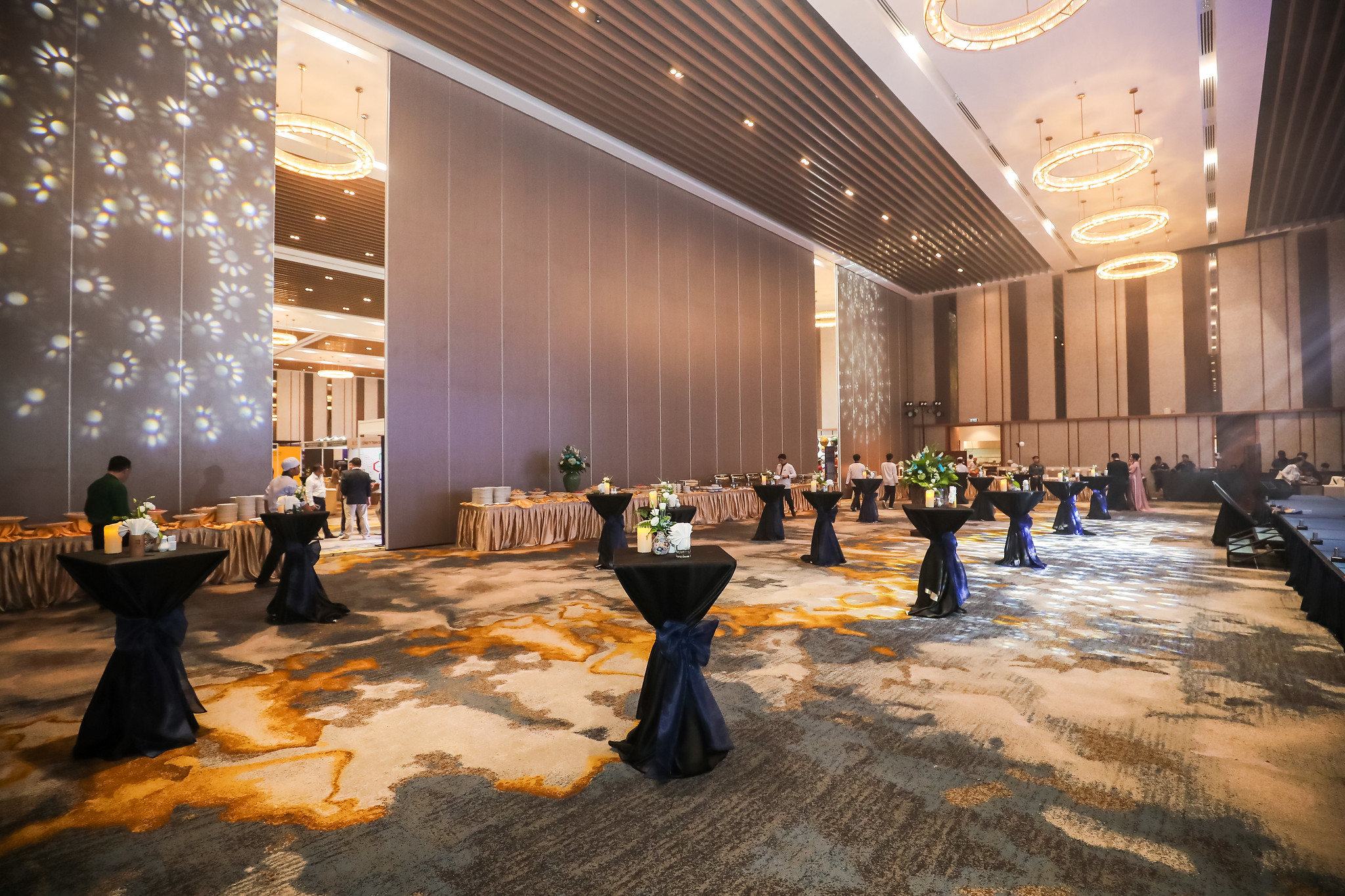
Large-scale conferences are often remembered for their stages, speakers, exhibition booths, panel discussions and attendance figures. What receives far less attention is everything happening behind the scenes: materials being produced and transported, food being prepared for large numbers of guests, air-conditioning, lighting and technical equipment running continuously, and the waste generated within just a few days.
Yet these less visible elements account for a significant part of an event’s environmental footprint.
For the hospitality and tourism industry, the issue is particularly relevant. The sector depends heavily on food, water, energy, materials and transportation to create guest experiences. A forum discussing the future of hospitality can therefore hardly separate sustainability from the way the forum itself is organised.
HORECFEX VIETNAM 2026 is choosing to begin there.
Rather than making a broad claim about becoming a “green event”, the organisers are focusing on areas that can be managed and measured: materials, food, transportation, waste, water and energy. The goal is not to create an event with no environmental impact at all — an unrealistic expectation for an event of this scale — but to understand where that impact occurs and gradually reduce what is unnecessary.
Sustainability begins before opening day
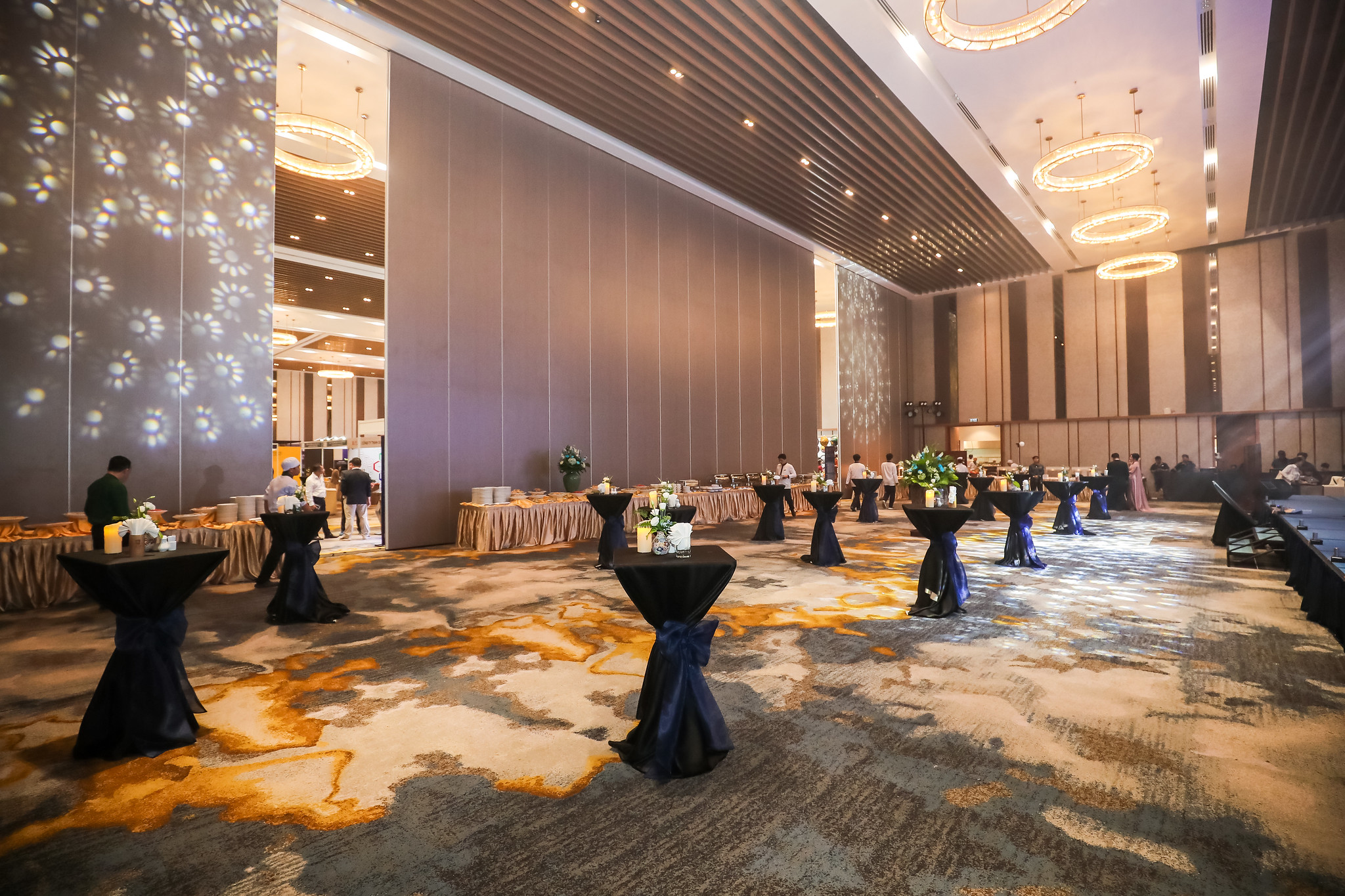
At HORECFEX VIETNAM 2026, sustainability therefore begins at the preparation stage.
Instead of automatically producing new materials for every edition, HORECFEX aims to reuse items that remain fit for purpose, including name badges, banners, backdrops and selected event materials. Printed documents are gradually being shifted to digital formats, while recycled materials and options with longer usable lifespans are prioritised where appropriate when new production is necessary.
Local sourcing is another part of this approach. Shorter transportation distances can help reduce some of the impact associated with logistics, while also directing part of the event’s procurement back into the local network of businesses and suppliers.
The life cycle of event materials does not necessarily end when the two-day programme does. Items that remain usable can be recovered, reused or sent for recycling before becoming waste.
Individually, these changes may seem small. Reusing a name badge or replacing a printed document with a digital version is unlikely to create a significant difference on its own. But when many similar decisions are made from the outset, the amount of material that needs to be produced, transported and eventually discarded can be reduced considerably.
It reflects a more practical approach to sustainable event management: rather than waiting for waste to be created and then deciding how to deal with it, reduce what could become waste from the beginning.
From the dining table to the community: where does leftover food go?
For an event serving a large number of attendees, food is always a difficult equation. Preparing too little may directly affect the guest experience, while excessive preparation can leave substantial amounts of ingredients and resources unused.
HORECFEX VIETNAM 2026 aims to address this from the stages of ingredient selection and menu planning by prioritising local suppliers where appropriate, aligning serving quantities more closely with actual demand and reducing food surplus throughout the event.
Food that remains safe and suitable for consumption may be considered for redistribution to communities in need rather than being automatically discarded after the event. For food that can no longer be consumed, options such as composting or organic recycling are being considered to prevent as much as possible from entering the general waste stream.
The issue extends beyond the value of the food itself. Behind every dish served are ingredients, water, energy, labour, transportation, storage and preparation. When food is wasted, the resources invested throughout that entire process are wasted with it.
Food waste decomposing under low-oxygen conditions can also release methane (CH₄), a greenhouse gas with a substantially greater global warming impact than CO₂. Reducing food surplus is therefore not simply a matter of cost control or efficient ingredient use; it is also directly connected to the environmental impact of an event.
This is particularly relevant at a forum dedicated to hospitality and tourism. Restaurants, hotels and resorts face the same question every day: how to maintain service quality while controlling ingredients, reducing waste and maintaining meaningful connections with local communities.
HORECFEX is bringing that same question into the way the event itself is organised.
Food that is not discarded can continue to create value elsewhere. An ingredient sourced locally does more than serve a single meal; it also helps retain value within the destination’s supply chain. Even the waste that cannot be avoided does not necessarily have to end its journey in landfill if it is handled appropriately.
Reducing waste is not simply about throwing away less. It is about making better use of the resources already invested in the event and finding ways for their remaining value to continue.
An event’s impact also extends to the journey
A significant share of an event’s environmental footprint can be generated outside the conference venue itself.
Attendees, speakers, partners, suppliers and operational teams all need to travel. When participation reaches into the thousands, the combined number of journeys becomes significant even if each individual trip is relatively short.
HORECFEX VIETNAM 2026 is incorporating mobility into its sustainability planning through initiatives such as transportation support from Xanh SM, while encouraging the use of public transport and car-sharing where possible.
More importantly, the organisers aim to collect information on how attendees travel: which modes of transport are most commonly used, how far people travel and what options could potentially be improved in future editions.
Collecting this data will not immediately reduce emissions. But without an initial set of information, it becomes difficult to identify which areas should be prioritised or determine whether future changes are actually producing meaningful results.
At this point, sustainability begins to move from a broad principle towards a more practical form of management: understanding where you are before deciding how far you want to go.

Turning waste into data — and knowing where to improve
Waste is among the most visible impacts of any large-scale event. But seeing waste does not necessarily mean understanding how much is being generated, where it comes from or where reductions can realistically be made.
At HORECFEX VIETNAM 2026, waste management therefore goes beyond simply providing sorting points. The event aims to strengthen waste separation in kitchen and food-service areas, recover materials that can still be used, direct recyclable waste to appropriate operators and, importantly, record the amount of waste generated in kilograms.
The purpose is not to create an impressive figure for a sustainability report.
It is to establish an initial baseline showing how much waste each edition generates, which categories account for the largest share and how much can potentially be diverted from landfill.
Once the data exists, the questions for future editions become more specific: which materials should be reduced, which areas generate the most waste, where serving practices can be adjusted and whether food quantities are being planned appropriately.
From this perspective, sustainability is no longer simply a commitment. It becomes an ongoing process that can be tracked from one edition to the next through measurement, evaluation and adjustment.
Water and energy: the less visible resources behind the event
When a conference hall operates smoothly, attendees rarely think about the electricity required to run air-conditioning, LED screens, lighting, audio systems and the many technical components working behind the scenes.
Water is similar. It is used throughout an event but often becomes noticeable only when it is unavailable.
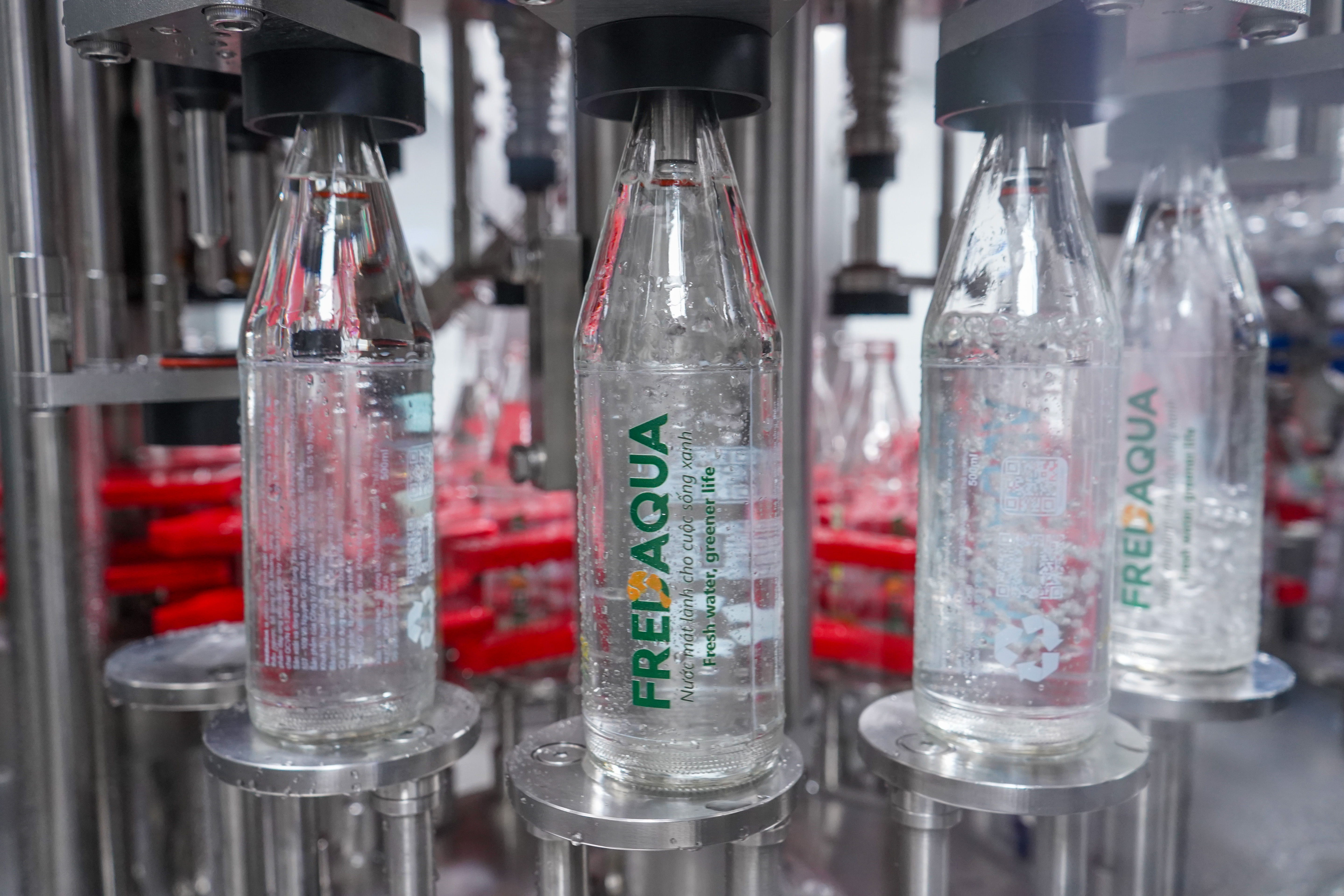
HORECFEX VIETNAM 2026 is therefore bringing both resources into areas that require closer monitoring. For drinking water, the event makes use of existing infrastructure across Furama - Ariyana, including the FREDAQUA water production system, while encouraging reusable bottles and reducing dependence on single-use packaging.
Energy is approached in much the same way. Monitoring electricity consumption by area can help organisers identify where energy use is highest and where opportunities for optimisation may exist in future editions.
An international event still needs to maintain standards for temperature, lighting, sound and overall guest experience. The objective is therefore not to reduce consumption at any cost, but to use the right amount of resources for the level of quality required and understand where further improvement is possible.
Measure. Optimise. Improve.
The three steps may sound simple, but only with data can the performance of one year be meaningfully compared with the next.
A sustainable event cannot depend on the organisers alone
HORECFEX can provide water refill points, but the number of plastic bottles will only decline if attendees choose reusable alternatives. Waste-sorting systems only work when waste is placed in the correct stream. Lower-impact transportation options only create change when people actually choose to use them.
Sustainability therefore cannot be the responsibility of the organisers alone.
It requires the participation of the venue, suppliers, food-service providers, participating businesses, speakers, attendees, operational teams and the organisations responsible for receiving and processing waste after the event.
Food donation is one example. Social value is not created simply by deciding not to discard usable food. It requires an entire chain that protects quality and food safety while ensuring that the food can reach the communities that need it.
Likewise, a more environmentally responsible option only creates meaningful impact when the conditions around it make that option practical and accessible.
In this respect, HORECFEX reflects the industry it serves. Hospitality and tourism are themselves ecosystems in which sustainability goals are difficult to achieve through management decisions alone. Suppliers, employees, guests and partners all influence the final outcome.
Sustainability at HORECFEX is therefore ultimately a collective effort, in which the organisers’ role is not simply to make responsible choices, but also to create an environment where those choices become easier to adopt and possible to measure.
When the way a forum is organised reflects what it stands for
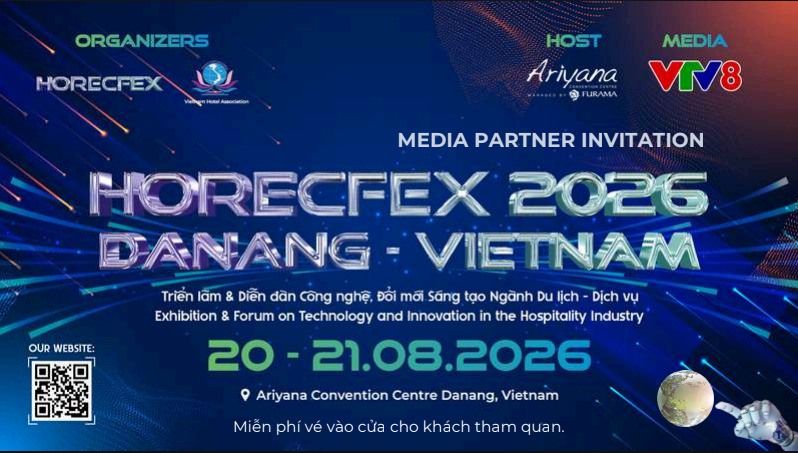
HORECFEX VIETNAM 2026 is built around four core pillars: Knowledge, Technology, Supply and Connections.
Sustainability does not sit outside those four elements.
Knowledge helps the industry understand the impact of the decisions being made. Technology supports measurement and optimisation. Supply determines which materials, food products and solutions are selected. Connections bring different stakeholders into a process that no organisation can accomplish alone.
In that sense, the way HORECFEX organises itself also becomes part of what the event seeks to discuss with the industry.
A forum focused on innovation becomes more convincing when change is not limited to what appears on stage. Likewise, a programme discussing sustainability becomes more meaningful when those principles influence the way materials are selected, food is served, attendees travel, waste is handled and resources are consumed.
No single action is enough to make HORECFEX a sustainable event. In practice, the changes are often much smaller: one material reused rather than replaced, one portion of food kept from becoming waste, one kilogram of waste recorded, or one source of energy consumption identified more clearly.
But it is precisely these small choices and the data they generate that provide a foundation for the next edition to improve on the one before it.
For the hospitality and tourism industry, the same challenge is unavoidable. The sector will continue to serve guests, operate facilities and consume food, water and energy. What can change is how those resources are used, how much waste can be reduced and how widely the value created can be shared with surrounding communities.
HORECFEX VIETNAM 2026 is bringing that thinking into the way the event itself is prepared and operated — not through a sweeping declaration, but through specific choices that can be implemented, recorded and continuously improved.
Because sustainability only becomes meaningful when what is committed to today can be measured — and done better — tomorrow.
HORECFEX VIETNAM 2026
ALL YOU NEED - Knowledge. Technology. Supply. Connections.