


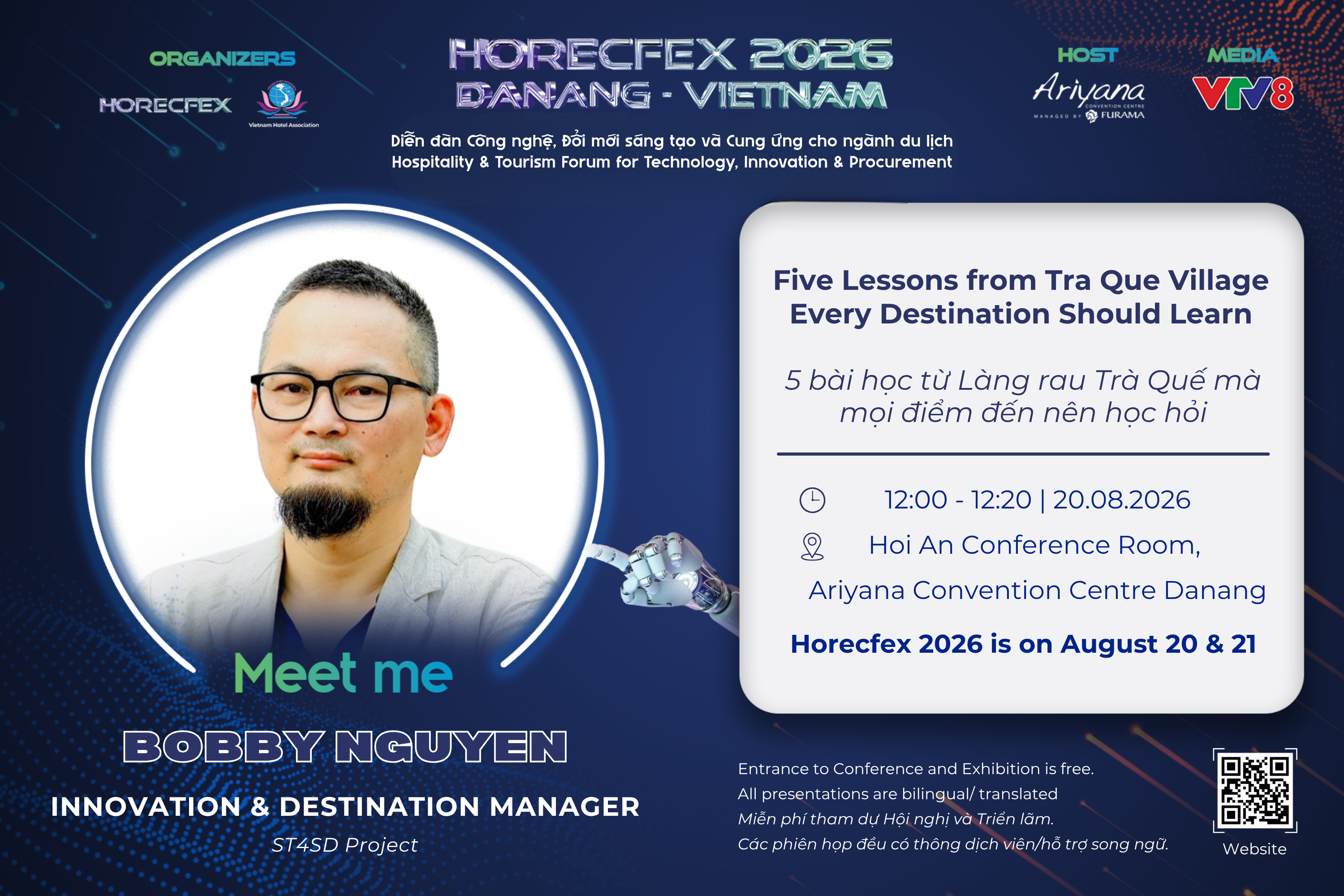
From a traditional vegetable village, Tra Que has grown into a UN Tourism Best Tourism Village 2024. Behind this recognition is not only the story of a successful tourism product, but also an example of how a community can transform everyday life, traditional livelihoods, and local identity into experiences that appeal to international travelers.
At HORECFEX VIETNAM 2026, Bobby Nguyen – Innovation & Destination Manager at the Swiss Tourism for Sustainable Development (ST4SD) Project – will share “Five Lessons from Tra Que Vegetable Village Every Destination Should Learn.”
In his current role, he contributes to strategic direction and the development of tourism models and products tailored to the characteristics of each locality, while connecting these initiatives with international standards for sustainability and green tourism.
A notable aspect of Bobby Nguyen’s approach is that destination development does not begin with copying a successful model from somewhere else. Each destination needs to identify what makes it distinctive – whether that is a traditional craft, natural landscape, local customs, a cultural story, or the people who live there – and then transform those assets into experiences that travelers can participate in and remember.
Projects ranging from Tra Que Vegetable Village to cultural village models also highlight the importance of storytelling. A destination story should not be created only for marketing purposes. It needs to grow from the emotions, heritage, and everyday life of the community itself. When local people become part of the story, a greater share of the value created by tourism can also remain within the destination.
The session at HORECFEX VIETNAM 2026 will therefore go beyond simply telling the success story of Tra Que. The five lessons from this model can offer practical insights into identifying local assets, developing tourism products, encouraging community participation, telling destination stories, and preserving those values throughout the development process.
For destination managers, hotels, tour operators, and tourism product developers, this perspective is particularly relevant as travelers increasingly seek authentic experiences with a clear connection to the places they visit.
A destination with long-term competitiveness is not necessarily the one that changes the most. It may be the one that understands most clearly what it already has – and knows how to turn those values into compelling reasons for travelers to visit.