



A hotel closes the month at 80% occupancy. That may look like a strong result. But if comparable hotels in the same competitive set are achieving 88%, the picture changes immediately. In a fast-growing tourism market like Vietnam, the question for businesses is no longer simply “Are we growing?” but rather “Are we growing faster or slower than the market?” This is also where data from STR | CoStar Group can help hotel professionals gain a clearer perspective at HORECFEX VIETNAM 2026.
Vietnam entered 2026 with strong tourism demand. In the first seven months of the year alone, the country welcomed approximately 13.9 million international visitors, up 13.8% year on year, equivalent to more than half of the full-year target of 25 million international arrivals. July alone recorded around 1.67 million international visitors.
From the demand side, this is clearly positive.
But hotel market performance is never determined by demand alone. The other side of the equation is the number of rooms already in the market and the new supply preparing to enter it. According to the Vietnam National Authority of Tourism, by the end of March 2026, the country had more than 801,000 accommodation rooms, including 299 five-star properties.
New development plans continue to be announced. In July 2026, Accor and Sun Group signed an agreement expected to add another 5,300 hotel rooms to Accor’s portfolio in Vietnam, with some of the first projects located in Da Nang and Phu Quoc. CoStar reported that Vietnam has already become Accor’s third-largest market in Asia by hotel count.
Demand is rising. Investment is continuing.
And it is precisely between those two movements that attractive figures for visitor arrivals or hotel occupancy begin to require a closer reading.

HORECFEX brings market data, expert perspectives and real operational challenges into one shared space for the Hospitality and Tourism community.
Is 80% occupancy really a good result?
In hotel operations, occupancy is often one of the first numbers people look at.
But 80% on its own says very little.
Suppose a hotel achieves 80% occupancy for the month. If its competitive set is only running at 70%, the property is capturing a stronger share of market demand. But if competitors are achieving 88%, the same 80% suggests that the hotel is attracting a smaller share of available demand than the properties around it.
Room rates work the same way.
A 10% year-on-year increase in ADR - Average Daily Rate - may sound positive. But if the competitive set has increased rates by 15%, the hotel may still be losing pricing power. RevPAR - Revenue per Available Room - may rise in absolute terms while the property’s relative market position actually weakens.
This is why benchmarking has become such an important part of hotel data analysis.
STR does not simply look at a hotel’s Occupancy, ADR or RevPAR in isolation. Metrics such as MPI compare occupancy performance, ARI compares ADR, and RGI compares RevPAR against a competitive set or market. Within this framework, an index of 100 represents “fair share”; above 100 indicates that the hotel is outperforming its comparison set, while below 100 suggests the opposite.
What may appear to be a technical distinction actually leads to a very important business question:
Is the hotel growing because the business itself is performing better, or simply because the entire market is moving upward?
A rising market does not mean every hotel benefits equally
This is also one of the questions HORECFEX raises in introducing this year’s hotel market data session: growth across a market does not mean every hotel within that market benefits in the same way. Occupancy, ADR and RevPAR only become truly useful when businesses understand the story behind the numbers.
This becomes even more relevant when looking back at data presented by STR at HORECFEX in 2025.
In Da Nang, hotel occupancy at the time was recorded at around 60-70%, above the average level seen during 2013-2019, while peak-season ADR ranged between approximately USD 120-140. The data also showed occupancy growing faster than room rates, reflecting strong accommodation demand while new supply had not yet expanded too rapidly.
One year later, the important question is no longer simply how far the market has recovered.
If visitor numbers continue to increase while new hotel supply is also being added, businesses need to look more closely at the pace of demand growth relative to room supply, the absorption capacity of different segments, and the pricing power of individual markets.
One resort may sell more rooms but need to lower rates to achieve occupancy.
Another hotel may deliberately maintain lower occupancy while securing significantly higher rates.
A new project may enter the market at exactly the right moment when demand is accelerating. Yet the same project could face a completely different environment if it opens while thousands of other new rooms are entering the market at the same time.
For that reason, “the market is doing well” is not enough information on which to base an investment decision.
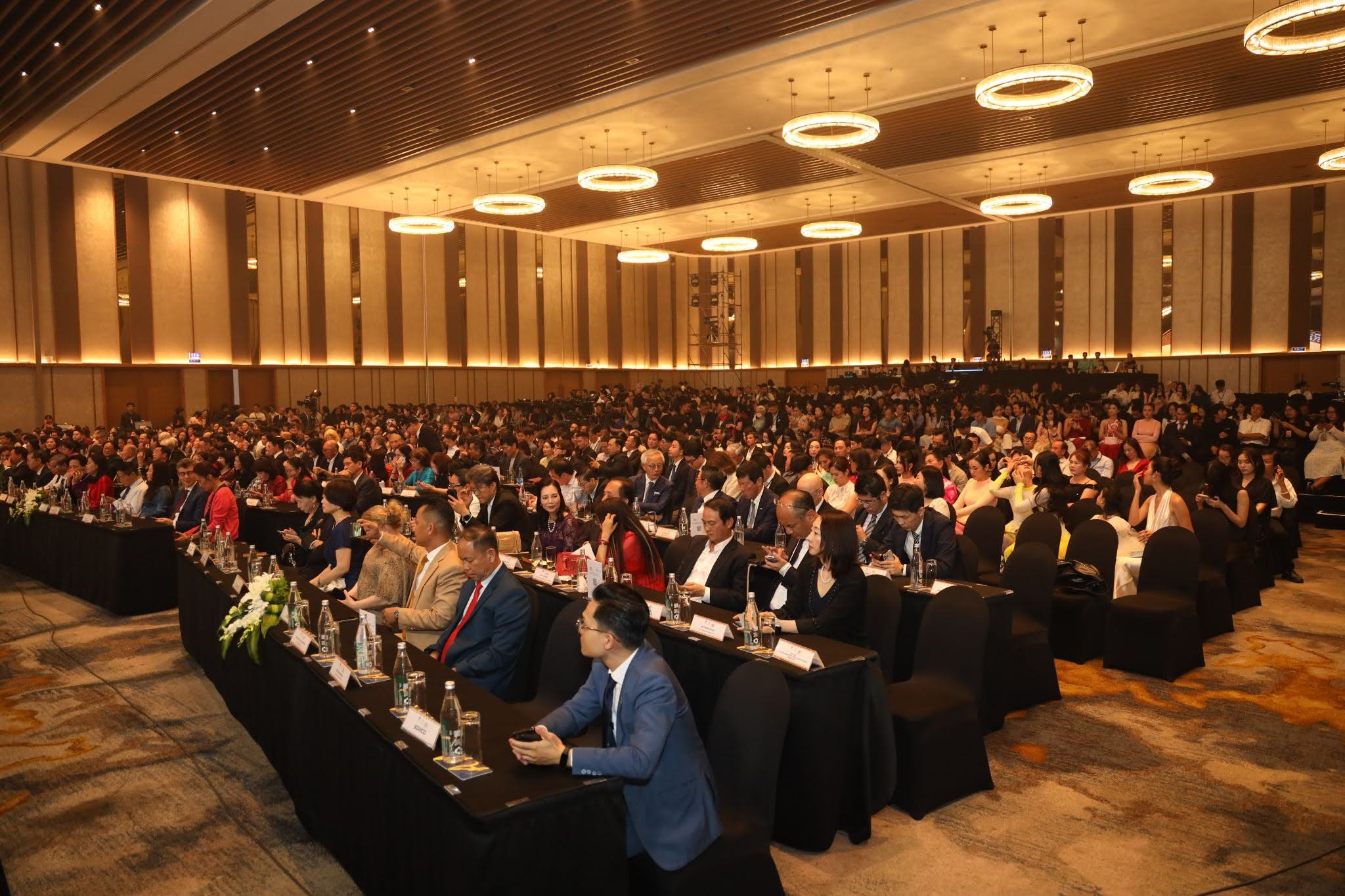
At Ariyana Convention Centre Danang, the market’s biggest questions are not only raised, but become the subject of direct dialogue among businesses, experts and the Hospitality and Tourism community.
From “Is the market growing?” to “Where is the growth actually happening?”
This is what makes the participation of Ms. Oxy Ong, STR | CoStar Group representative for South Asia and Southeast Asia, at HORECFEX VIETNAM 2026 particularly relevant.
Her session is built around the topic “Vietnam's Hotel Market: Growth, Gaps, and What's Next”. According to HORECFEX, the session will look beyond the performance of Vietnam’s hotel industry to examine emerging opportunities, structural challenges, the outlook for both urban and resort markets, and Vietnam’s position relative to other destinations across Southeast Asia.
Placing Vietnam within a regional context matters.
An ADR of USD 150 cannot simply be considered high or low without understanding the product, market and competitive environment. Likewise, a destination growing by 10% means something very different if competing destinations are growing by only 3% - or by 20%.
Benchmarking therefore takes businesses beyond the rear-view mirror of their own performance.
Instead of asking only how much revenue has increased compared with last year, hotels can ask more demanding questions: Are we gaining market share? Are competitors raising rates faster or slower than we are? Which days of the week still have room to grow? Which segments are generating demand? And are we genuinely outperforming the market?
STR operates at a scale that makes these comparisons possible. According to CoStar Group, STR currently aggregates data from approximately 94,000 hotels representing 12 million rooms across more than 190 countries, supporting benchmarking and analysis for hotel brands, operators, owners and investors.
But large volumes of data are not the end value.
The value lies in the decisions made after the data is interpreted.

Ms. Oxy Ong of STR | CoStar Group will bring perspectives on growth, market gaps and what comes next for Vietnam’s hotel sector at HORECFEX VIETNAM 2026.
Raise rates, protect occupancy or invest further?
For a revenue manager, a market signal may lead to a pricing decision.
For a general manager, it may influence how the hotel balances group, leisure and corporate business.
For an owner, the data may affect decisions around renovation, expansion or product repositioning.
For an investor considering a new project, the question becomes much bigger: what should be built, where, and at what point in the cycle?
HORECFEX places these questions directly into this year’s STR session: which locations may be suitable for new projects, which segments still have potential, what pricing levels accurately reflect demand, how new supply may affect the market, and how guest behaviour is changing.
This is when figures such as international arrivals and future room supply begin to carry real meaning.
The 13.9 million international visitors recorded in the first seven months of the year signal demand. More than 801,000 accommodation rooms show the scale of existing supply. A single agreement adding 5,300 rooms to the portfolio of an international hotel group indicates that investment confidence remains strong.
But none of these numbers, taken alone, can tell an investor whether a particular project should be built or whether a particular hotel should raise its rates.
The decision only becomes clearer when those data points are placed together.
Vietnam is entering a different phase of the growth conversation
For several years, the story of Vietnamese tourism was closely tied to the recovery of visitor numbers. In 2026, the context is beginning to look different.
In January 2026, Vietnam recorded nearly 2.5 million international visitors in a single month for the first time, the highest level ever recorded at the time of publication. By the end of the first six months, arrivals had reached 12.3 million, up 14.9%; after seven months, the figure stood at 13.9 million.
The question “Have travellers returned?” therefore carries less value than it once did.
The questions that follow are harder: which source markets are driving growth; which destinations are benefiting most; how much room remains for luxury, upper upscale and other segments; how quickly new supply will be absorbed; and which businesses are growing faster than the market itself.
This is the gap between tourism growth and hotel business performance.
A destination may welcome millions of additional travellers, but not every hotel has the same guest mix, pricing strategy, distribution channels or product proposition with which to benefit from that growth.
What businesses need, therefore, is not simply more data about the size of the market. More important is knowing which data is relevant to the decision they are about to make.
HORECFEX: before asking which technology to invest in, know which problem you are trying to solve
This creates a clear connection between STR and the broader structure of HORECFEX VIETNAM.
At an event where businesses can explore robotics, artificial intelligence, management systems, projection technologies, operational solutions and many other products, it is easy to begin with the question:
“Which technology is worth investing in?”
But perhaps another question needs to come first:
“What problem does the business actually need to solve?”

A hotel losing pricing power requires a different response from one struggling with occupancy. A market experiencing rapid demand growth but limited supply presents a different investment environment from one preparing to absorb thousands of new rooms. A resort seeking to develop its MICE business also needs to read different signals from an urban hotel dependent on corporate travellers.